

2026 Berlin Seminar Inspires Ever-Green Leaders to Keep Momentum for Energy Projects in Minnesota and Across the US
June 29, 2026 by Ever-Green Energy
Europe is known as a leader in district energy, and Ever-Green Energy has been fortunate to build connections abroad over time through the Berlin Seminar on Energy Policy. A collaboration between the University of Minnesota’s Institute on the Environment and Germany’s Federal Ministry for Economic Affairs and Energy, the seminar has allowed a non-partisan delegation of energy leaders to learn from one another for the past 15 years.
While previous seminars focused on an energy transition, this year’s discussion around how the evolution of AI and digitization are already reshaping energy systems.
Karly Baraga Werner, Senior Vice President, External Affairs and Chief Legal Officer and Steve Rambeck, Ever-Green’s Vice President of Business Development and Commercial Strategy, embarked on the June trip to Duesseldorf, Muenster, Saerbeck, Warendorf, and Berlin. This year’s focus was on clean heat technology and data center heat recovery, highlighting aspects of the energy transformation that is also relevant in Minnesota, as seen through District Energy St. Paul’s Clean Heat St. Paul initiative.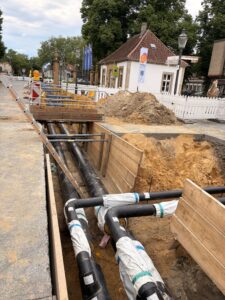
“Clean heat technology is already being implemented,” said Baraga Werner, referring to a site visit to the Erms River Heating Plant in Wehrendorf, a district energy system that harvests heat from the river. “The plant is able to retire a lot of its gas heat sources,” noting that it was inspiring to see the technology in action.
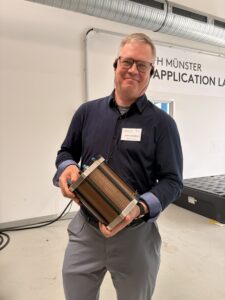 Rambeck noted that district heating systems are more prevalent and available to decarbonize buildings in Germany and throughout Europe, and new, low temperature systems are gaining traction and a competitive edge against air-source heat pump alternatives. He also observed that spark gap economics (the ratio of the price of electricity to the price of fossil fuels) and carbon tax incentives provide different economic incentives in Germany than what we are used to in the United States.
“While some of the underlying assumptions and economics are different in Germany, the challenges they have faced around stakeholder engagement and alignment are very similar to the challenges we are seeing here,” he said, sharing that German stakeholders are often involved in the financial structure of their energy transition through means like ownership and profit-sharing.
Baraga Werner and Rambeck both noted that data center heat recovery is more widely recognized in Germany and viewed as a viable heat source for existing district networks. It’s often the first thing municipalities look to as part of their energy planning process. The trip included a presentation from the developers of Das Neue Gartenfeld, a redevelopment site where ENGIE and the city of Berlin are capturing heat from a data center to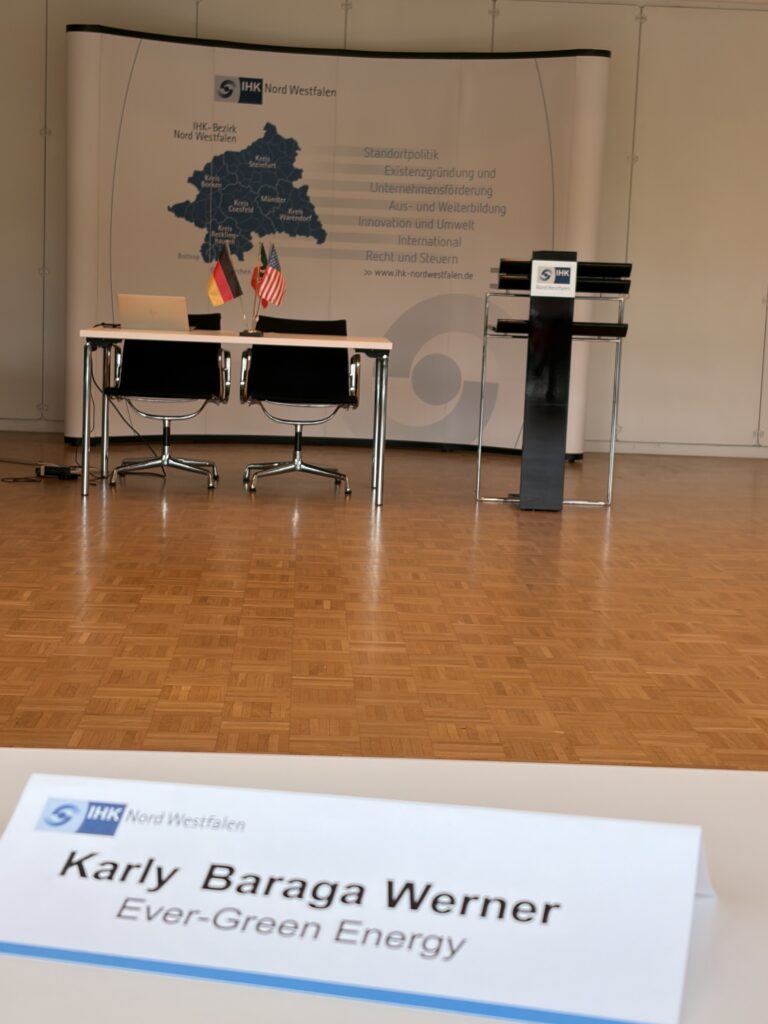 build a sustainable, low-carbon district.
“Germany’s motivation to advance their energy systems is strong, driven primarily by their dependency on other countries for their current energy supply and the risk that represents,” noted Rambeck.
Data center heat recovery is something Baraga Werner would like to see implemented in the US. “It was really exciting to see that it is possible,” she said. “But it’s going to take partnership. In Germany, we saw a lot of partnerships between the local and federal governments, the community, and industry all working together.”
The 2026 delegation brought together 17 of Minnesota’s leaders working across politics, government, business, and research to learn from German counterparts. The spirit of the trip was in partnership and innovation, which left Baraga Werner feeling encouraged.
“Our delegation is excited to work towards bringing some of these great ideas back to the US,” she says, and Ever-Green looks forward to deepening the new connections made on this trip and implementing the innovative spirit witnessed abroad into our existing partnerships.


